
Dana Point Second Story Addition Contractors: Coastal Home Expansions
Dana Point homeowners often outgrow their homes but don’t want to leave the coastal community they love. Whether it’s adding space for a growing family or capturing ocean views, building up is often the best solution. In a market with strict regulations and high property values, choosing the right contractor is critical.
Sea Pointe Design & Remodel has over 40 years of experience delivering complex home expansions across Orange County. As a fully integrated design-build firm, we manage everything from design and engineering to coastal permitting, HOA documentation, and construction under one roof.
Why Dana Point Homeowners Build Up
Capturing Views and Space That Only a Second Floor Delivers
In Dana Point, a second-story addition is often about more than space—it’s about elevation. Building up unlocks ocean, harbor, and canyon views that aren’t possible from the ground floor, especially in communities like Lantern Village, Monarch Beach, and Dana Hills.
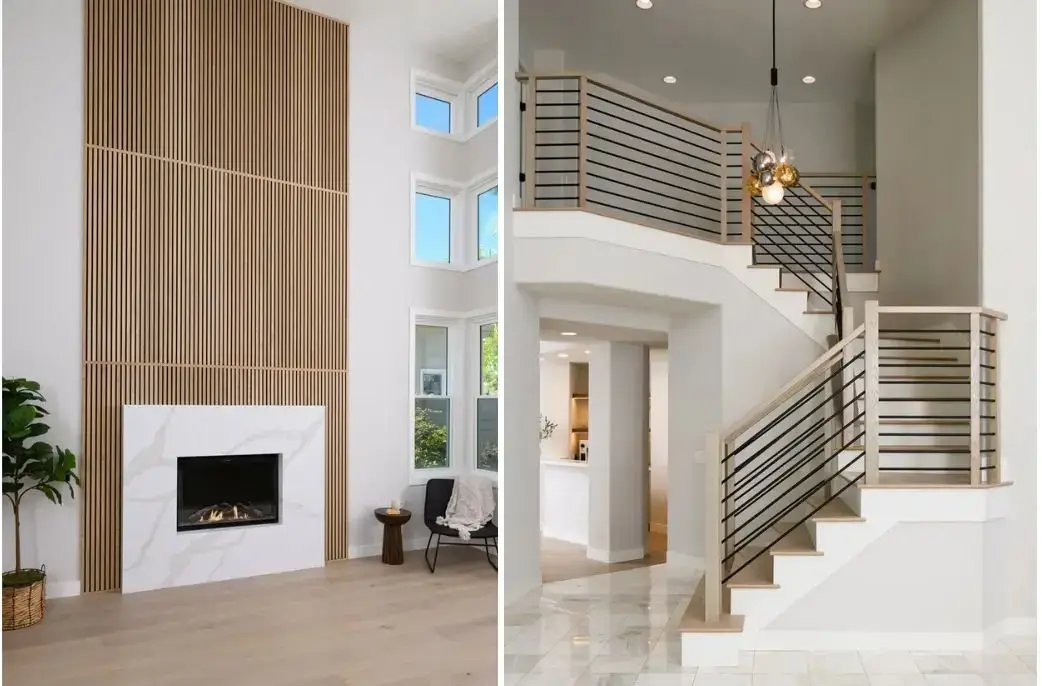
Beyond views, a second-story adds bedrooms, a primary suite, and additional livable square footage that Dana Point buyers consistently value. It improves both daily functionality and long-term resale appeal, combining lifestyle upgrades with practical space in a single project.
Lot Constraints Make Vertical Expansion Essential
Dana Point’s coastal location means many properties are governed by a layered set of constraints: city setback requirements, Coastal Commission jurisdiction in portions of the community, HOA architectural standards, and lot coverage limits that restrict ground-level expansion. For homeowners in these conditions, building up isn’t just the preferred option — it’s often the only realistic one.
Navigating these constraints requires a contractor with genuine experience in Dana Point’s specific regulatory environment — not a generalist who applies the same approach regardless of jurisdiction. Sea Pointe’s team understands coastal permitting, HOA design standards, and the City of Dana Point’s building requirements at a level most contractors cannot replicate.
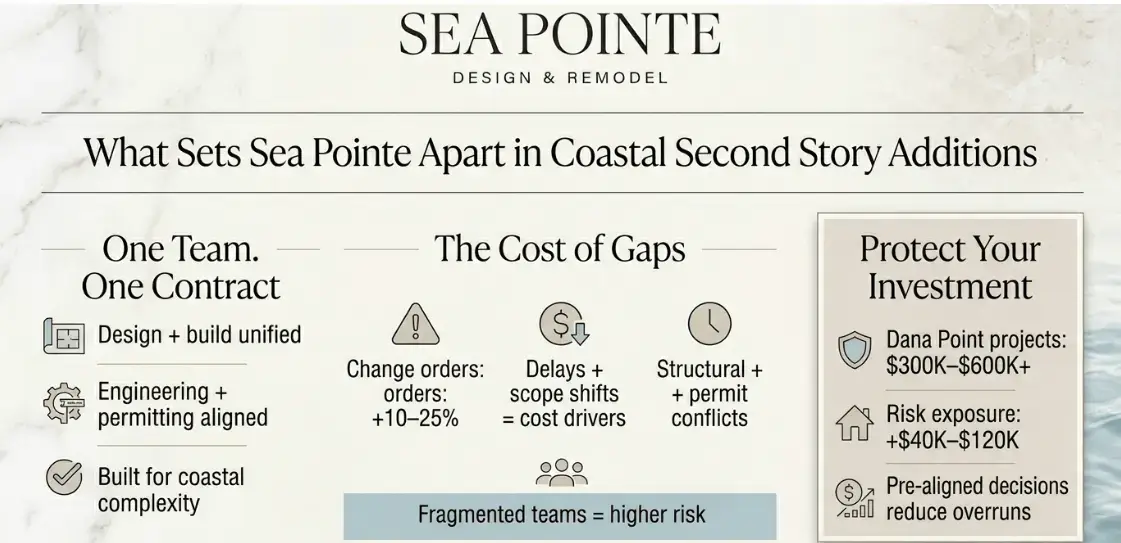
What Sets Sea Pointe Apart for Coastal Second Story Additions
One Contract. One Team. Total Coordination.
Most contractors handle construction but not design, while designers lack construction oversight. Sea Pointe combines both under one contract, with a single team managing design, engineering, permitting, and construction—an essential approach for complex coastal additions.
When these phases are separate, gaps lead to costly issues like change orders, structural conflicts, and permitting delays. In a high-value market like Dana Point, those mistakes can significantly increase project costs.
The Financial Case for Getting It Right
According to the National Association of Home Builders, change orders are a leading cause of budget overruns in residential construction, commonly adding 10–25% to total project costs. Research from the U.S. Department of Housing and Urban Development similarly identifies project delays and scope changes as primary cost drivers.
On a second-story addition in Dana Point — where projects typically range from $300,000–$600,000+ — fragmented execution can realistically add $40,000–$120,000 in avoidable costs. Sea Pointe’s integrated model resolves structural, design, and permitting decisions before construction begins, protecting your investment from the start.
Coastal Hazard and Geotechnical Requirements: A Critical Layer
Wave Action, Flood Zones, and Foundation Engineering
For Dana Point homes near the coast or bluffs, a second-story addition often triggers additional engineering requirements. FEMA notes that wave runup can raise water levels beyond standard flood elevations, requiring stronger structural design. In high-risk zones, stricter standards apply to address wave action, storm surge, and erosion.
Projects near bluff edges or flood hazard zones often require geotechnical investigations before design begins. FEMA standards require foundations to resist erosion, scour, and wave forces, often leading to deeper or specialized solutions that add $10,000–$30,000+ and extend timelines. Sea Pointe evaluates these coastal risks upfront, not mid-project.
Coastal Permitting Reality: What Dana Point Homeowners Need to Know
A Multi-Layer Approval Process
Second-story additions in Dana Point involve a more complex permitting process than inland projects. In addition to city plan check reviews, properties in the Coastal Zone require a Coastal Development Permit.
Geotechnical reports, coastal hazard assessments, and environmental reviews can extend timelines for properties near bluffs or the harbor. HOA review—required in most communities—can add several weeks before city submission. Sea Pointe submits complete, code-compliant plans from the start to reduce delays and streamline approvals.
Understanding the Full Cost of a Dana Point Second Story Addition
Construction Costs and the Soft Cost Layer
Second story additions in Dana Point reflect the premium coastal market. A partial addition typically ranges from $250,000–$375,000, while a full expansion ranges from $400,000–$600,000+. Costs run higher than national averages due to coastal engineering requirements, premium labor, and regulatory review. Soft costs—permits ($2,000–$10,000+).
Structural Feasibility in Coastal Conditions
Many Dana Point homes built in the 1980s–1990s were light wood-frame, single-story structures. Adding a second-story requires evaluating the foundation, shear walls, and load paths before design begins. FEMA P-807 — the federal standard on seismic evaluation of wood-frame buildings — highlights that structural failures often occur not because of material weakness but because of discontinuous load transfer at the foundation and first-floor level.
Structural reinforcement is a go/no-go assessment that must be completed before design begins. Sea Pointe evaluates structural feasibility first, treating it as the foundation of the entire process rather than a later cost adjustment.
Schedule Your Complimentary Consultation
Ready to explore a second-story addition for your Dana Point home? Sea Pointe Design & Remodel makes the first step easy. Schedule your complimentary in-home consultation, and a dedicated designer will visit your property, assess the existing structure and coastal conditions, and begin developing a plan tailored to your site, regulatory environment, and lifestyle.
Call us on (949) 861-3400, visit our design showroom at 576 Wald, Irvine, CA 92618 (Monday–Friday, 9 am–5 pm), or book online at seapointe.com.
Conclusion: Coastal Home Expansions Built for Dana Point
Dana Point offers one of the most compelling living environments in Southern California — and a well-executed second-story addition can make the most of every advantage that setting provides. Whether it’s capturing ocean views, adding a primary suite, or creating the space your family needs to grow, building up is one of the most strategic investments a Dana Point homeowner can make.
Sea Pointe Design & Remodel brings over 40 years of Orange County experience, a fully integrated design-and-build approach, and a proven track record of delivering coastal home expansions that exceed expectations. Call (949) 861-3400 or visit seapointe.com to schedule your complimentary in-home consultation — and take the first step toward a second-story addition worthy of Dana Point.
Do second-story addition contractors in Dana Point handle Coastal Development Permits?
Yes. Sea Pointe manages all permitting documentation, including Coastal Development Permit applications where required. Our team is experienced with Dana Point’s coastal regulatory environment and handles all city and HOA submissions on your behalf.
How long does a second-story addition typically take in Dana Point?
Most Dana Point second-story additions take 9–14+ months from design through construction completion, accounting for HOA review, city plan check, and coastal permitting. Projects requiring Coastal Commission review may extend beyond that timeline. Sea Pointe provides a detailed project schedule during the design phase.
Do I need to move out during construction?
In many cases, homeowners can remain on the lower level during construction, though roofline removal and structural reinforcement phases may require temporary relocation. Sea Pointe discusses displacement planning and phasing options during the initial consultation.
How do coastal regulations affect a second-story addition in Dana Point?
Properties within the Coastal Zone require a Coastal Development Permit in addition to standard city approvals. Height restrictions, view preservation standards, and coastal material requirements may also apply. Sea Pointe’s team has direct experience navigating these layers for Dana Point homeowners.
How much does a second-story addition cost in Dana Point?
Partial second-story additions typically start around $250,000–$375,000, while full expansions range from $400,000–$600,000+. Sea Pointe’s complimentary consultation includes honest, property-specific budget guidance before any commitment is made.
What structural work is typically required before adding a second-story?
Most second-story additions require engineering assessment and reinforcement of the existing foundation, shear walls, and load paths. The extent varies by the home’s original construction. Sea Pointe’s structural engineers assess all of this during the design phase, before any plans are finalized.
Does Sea Pointe serve Dana Point and nearby coastal communities?
Yes. Sea Pointe Design & Remodel serves homeowners throughout Orange County, including Dana Point, San Juan Capistrano, Laguna Niguel, San Clemente, and surrounding areas. Call (949) 861-3400 or visit seapointe.com to get started.